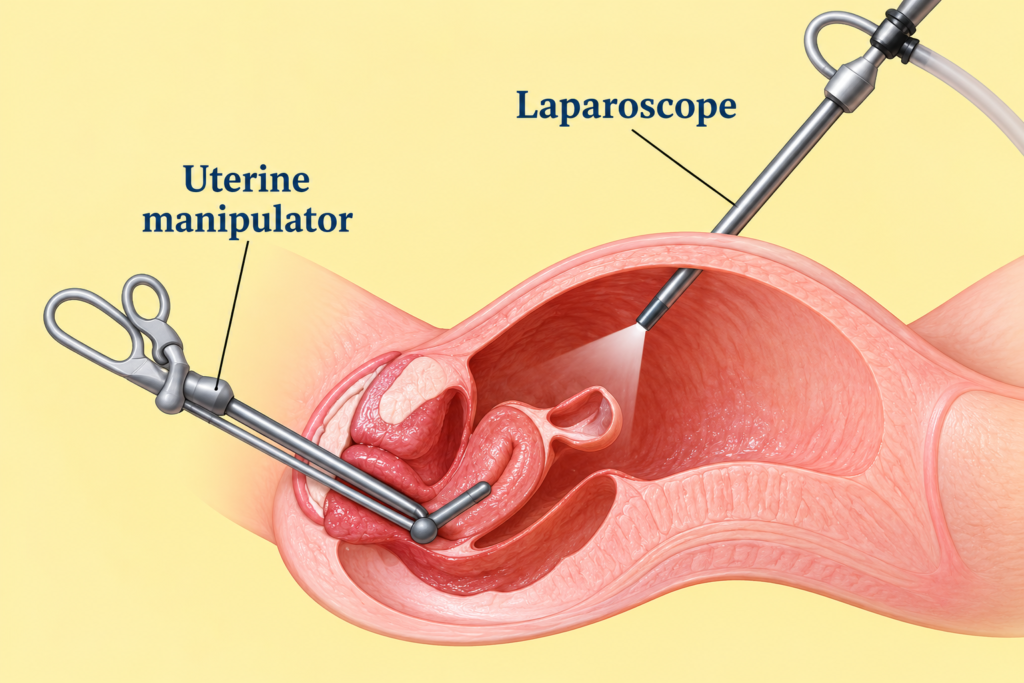
Laparoscopic surgery, often called “keyhole” surgery, is a minimally invasive technique in which a gynecologic surgeon views and operates on the pelvic organs through a few small abdominal incisions rather than one large opening.A thin, lighted scope (the laparoscope) is inserted through one incision to project a magnified view of the pelvis onto a monitor, while slender instruments passed through the other incisions perform the actual surgery.
Infertility, generally defined as the inability to conceive after a year of regular unprotected intercourse, affects both men and women and can result from ovulation disorders, blocked or damaged fallopian tubes, endometriosis, uterine conditions, low sperm count or quality, or unexplained causes. Evaluation typically involves a review of medical history, hormone testing, ultrasound, and imaging of the uterus and tubes to pinpoint the cause before choosing a treatment path.
Antenatal (prenatal) care is the regular medical care provided throughout pregnancy to monitor the health of both mother and baby and to catch potential complications early. Regular visits typically include:
Urogynecology focuses on pelvic floor disorders in women, conditions that arise when the muscles and tissues supporting the bladder, uterus, and bowel become weakened or damaged, often due to childbirth, aging, or menopause. Common conditions treated include: