
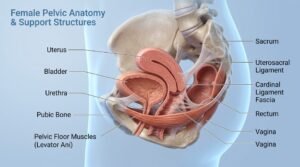
Urogynecology focuses on pelvic floor disorders in women, conditions
that arise when the muscles and tissues supporting the bladder, uterus, and
bowel become weakened or damaged, often due to childbirth, aging, or menopause.
Common conditions treated include
Urinary incontinence
Involuntary leakage of urine, whether triggered by coughing
and exercise (stress incontinence) or by a sudden, hard-to-control urge to
urinate (urge incontinence).
Pelvic organ prolapse
A dropping of the bladder, uterus, or rectum into or through the
vaginal wall due to weakened pelvic support.
Overactive bladder
Frequent, urgent need to urinate, sometimes with leakage, not
caused by infection.
Recurrent urinary tract infections
Often linked to incomplete bladder emptying or
anatomical changes from prolapse.
Fistulas
Abnormal connections between the bladder or bowel and the vagina, which can
occur after childbirth or surgery.
Treatment ranges from pelvic floor physical therapy and
lifestyle changes to medications, pessaries, and surgical repair, including
minimally invasive options.